
Direct tax collections fell Rs 12,000 crore (Rs 120 billion) short of the Rs 3.87 trillion target last fiscal, largely owing to lower realisation from corporate tax payers.

The Union Budget for 2009-10 presented by the finance minister is on predictable lines. Surely, the finance minister has done a fine balancing act of giving a thrust to growth while trying to contain fiscal imbalance.

Chief Economic Advisor (CEA) V Anantha Nageswaran on Thursday said describing India's recovery as 'K-shaped' was wrong as both rural and urban economies were recovering, albeit at different paces. Speaking to reporters at the Finance Ministry, Nageswaran said the gross domestic product (GDP) growth print for the recent October-December quarter (Q3FY23) will likely be revised upwards. "The notion of using the letter 'K' to denote urban and rural is somewhat wrong because it is almost as if one is growing and one is contracting. "I would say one segment's slope is more positive, and the other one slope is less positive but it is positive," Nageswaran said.

With the fight now having been taken to the seizure of nuclear plants, it is one more warning to Europe that this prolonged war could end up with disastrous consequences, observes Rashme Sehgal

The previous high was recorded at 7.5 per cent in the July-September quarter of 2016-17.
'It is entering growth territory on a month-on-month basis.'

ABB India's March quarter results (Q1CY24) were led by strong margin performance. Revenue was, however, largely in line with estimates at Rs 3,080 crore (up 28 per cent Y-o-Y and up 12 per cent Q-o-Q). The growth was across electrification (30 per cent Y-o-Y), process automation (73 per cent Y-o-Y) and robotics & motion (8 per cent Y-o-Y).
High crude oil prices in 2008 have left the government richer by a few thousand crore rupees. In 2008-09, the government earned "windfall profits" from the petroleum sector as crude oil prices spiked, touching a high of $147 in July 2008.
Refraining from tinkering with tax and duty rates in the interim Budget, Finance Minister Pranab Mukherjee on Monday made a huge allocation of Rs 30,100 crore (Rs 301 billion) to government's flagship rural employment programme and many other schemes in a bid to counter the economic recession.
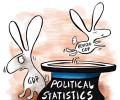
Whatever the claims about the new GDP numbers being technically superior to earlier estimates, their public credibility depends on their passing some reality checks, argues T N Ninan.

The weak April-June quarter (first quarter, or Q1) results of the largest listed specialty chemical maker, SRF, and multiple global headwinds for the sector are expected to weigh on the prospects of Indian specialty chemical companies in 2023-24 (FY24). Stocks in the sector (down 7-18 per cent) have underperformed the benchmarks (up over 10 per cent) in the past three months, and given the multiple challenges, the trend is likely to continue. Kotak Institutional Equities expects a very weak quarter (Q1FY24) for the sector due to destocking, demand weakness across certain critical end-use industries, and price erosion amid intense competition from Chinese suppliers.

Only 80.6 per cent of the Rs 6-trillion allocation has been spent by February, data from the Controller General of Accounts shows.

In view of India's faster industrial growth and improved business confidence, UK-based Standard Chartered Bank (SCB) on Tuesday revised upwards its forecast for the country's economic growth to 8.1 per cent for the current fiscal.

Choppers belonging to the Western Air Command carried out over 50 sorties over the last 48 hours, rescuing over 780 citizens in the flood-affected areas of Kangra district in Himachal Pradesh, Indian Air Force officials said.
As part of its fiscal tightening measures, the finance ministry has asked all government departments not to seek any increase in their allocations for 2009-10 over and above what has already been provided for in the Interim Budget presented on February 16.

India's economic growth slowed to 3.1 per cent in January-March and to an 11-year low of 4.2 per cent for the full fiscal 2019-20 amid a drop in consumption and investment. The Gross Domestic Product (GDP) growth stood at 5.7 per cent in the corresponding quarter of 2018-19, according to data released by National Statistical Office (NSO) on Friday.
As many as 267 of 453 companies from the BSE500 index are trading above their consensus price targets, according to the data compiled by Bloomberg. Not all companies in the BSE500 index are tracked by analysts.
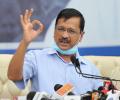
Sources in the Delhi government said the ministry of home affairs has stopped the Kejriwal government's budget and it will not be tabled in the assembly on Tuesday.
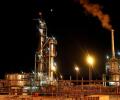
Escalation of the conflict in West Asia between Israel and Iran has had a direct impact on the energy markets, and more broadly on the financial markets as well as the global economy.

The decision to cut development expenditure does not bode well for safety and amenities.

'In equities, it has diversified portfolios.' 'So the short-term movement of individual stocks does not impact them.'

In January 2015, 25,023 tourists arrived by availing the scheme.
"Customs duty collection is likely to cross the budgetary estimate this year despite lowering of the peak rate. Barring external factors... economy will continue to grow at a high rate and manufacturing at a brisk rate," the finance minister said.

Ahead of the general elections, a slew of states and also the Centre had doled out sops to the marginalised sections, including the farmers and the poor.

Total disputed liability of Mallya with respect to service tax to the tune of Rs 535 cr

India's industrial production growth decelerated to an 8-month low of 2.4 per cent in November, mainly due to poor showing by the manufacturing sector, according to the official data released on Friday. The factory output growth measured in terms of the Index of Industrial Production (IIP) was 7.6 per cent in November 2022. The previous low of IIP growth was recorded at 1.9 per cent growth in March 2023.
Inflation surged to 5.48 per cent during the week ended December 23, just short of the upper threshold of Reserve Bank's projections for this fiscal, due to rise in prices of some essential manufactured products, food items and minerals.
The amount allocated for 2019-20 is 11 per cent higher compared to Rs 55,000 crore allocated for the year 2018-19.

The government has budgeted to cut the fiscal deficit to 3.3 per cent of GDP or Rs 6.24 lakh crore in 2018-19, from 3.53 per cent in the previous financial year.
The government's subsidy bill on food, fertiliser and petroleum, among others, will fall by about Rs 18,000 crore (Rs 180 billion) at Rs 1,11,275 crore (Rs 1112.75 billion) this fiscal, mainly due to sharp reduction in the urea dole outs.

the GDP estimates incorporate new source data and modified compilation techniques
Chandigarh has highest per capita income of Rs 67,370 per annum, followed by Pondicherry (Rs 56,034) and Delhi (Rs 53,976).\n\n
There is no payment problem for Russian crude, Petroleum and Natural Gas Minister Hardeep Singh Puri said on Wednesday. He said there is no proposal to cut retail fuel prices at the moment. Addressing a press conference, the minister said India enjoys a buyers' position and foreign suppliers are approaching Indian companies with offers to sell oil.

In line with the industry expectations, the government has indicated that it is actively considering extension of the NBS regime to cover urea.

The petroleum ministry has asked for a total compensation of Rs 60,000 crore (Rs 600 billion) to cover the subsidy portion till the third quarter of the current financial year.

Against FY17 target of Rs 56,500 cr, Centre plans to fetch around Rs 6,400 cr in the first half.
In spite of all the talk of helping the aam aadmi, the outlay under the Indira Aawas Yojana (IAY) for the rural poor in 2009-10 is more or less the same as in 2008-09 (revised estimate).

The Street's optimism on India's largest listed automotive maker by market capitalisation is not misplaced, given the robust wholesale performance in recent months and the strong 2023-24 (FY24) October-December (Q3) results.

On the complaint of shortage of foodgrain, the minister said lifting of foodgrain by states/Union Territories under TPDS and other welfare schemes has been less than the allocation made to them.
